
Having a very Chinese time
Observations from my pilgrimage to Shenzhen

The predominant view in the United States is that the Chinese government is authoritarian and their motivations are driven by a desire to beat us. My recent visit made me believe that these are symptoms of far more interesting motivations.
China’s malls are massive. We visited Guangzhou for a day and spent part of our day in a mall with an amusement park and gokarting track inside. “Shopping is the national past-time,” said my friend. There is a lot of credence to this claim given that every mall we visited was completely packed with people.
The version of capitalism practiced in China, in the sectors of the economy where it is allowed, felt more cutthroat than in the United States. Most manufacturers are competing head-to-head against others on similar SKUs, with the differentiation falling on price and quantity, vs. innovation.
Electric vehicles
A decade ago, Shenzhen had few electric vehicles. On my trip, seeing a gas car was an aberration in a sea of electric vehicles. Even more surprising were the twenty brands I didn’t recognize, the majority domestic. Where did they come from?
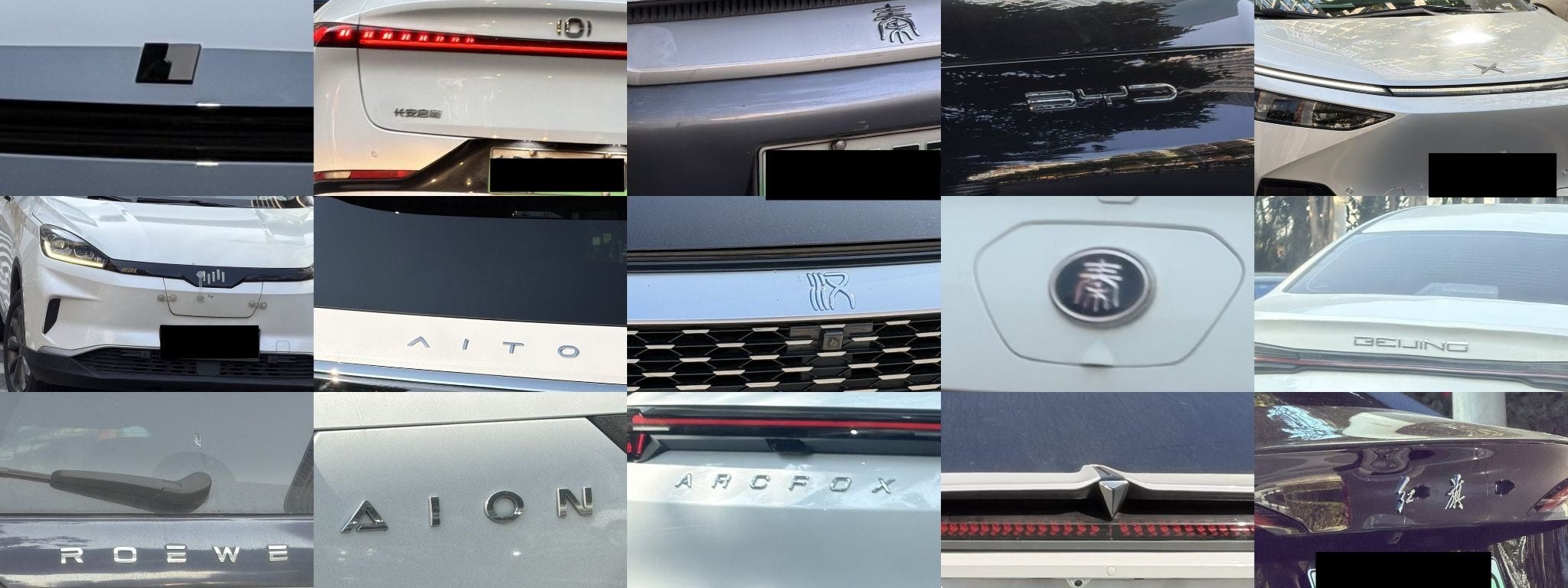
In 2009, Beijing declared electric vehicles a strategic industry and built a web of incentives and funding programs. Legacy automakers spun up EV divisions. Tech giants (e.g. Huawei, Xiaomi, Alibaba) pivoted in. Provinces launched their own brands to signal participation in the national project. Even Evergrande had one.
Each company scrambled for scale and any efficiency figured out by one brand was quickly copied by a competitor.
In 2010, 1,000 EVs sold in China. By 2018, yearly sales were 1.09 million — and some 500 manufacturers were registered.
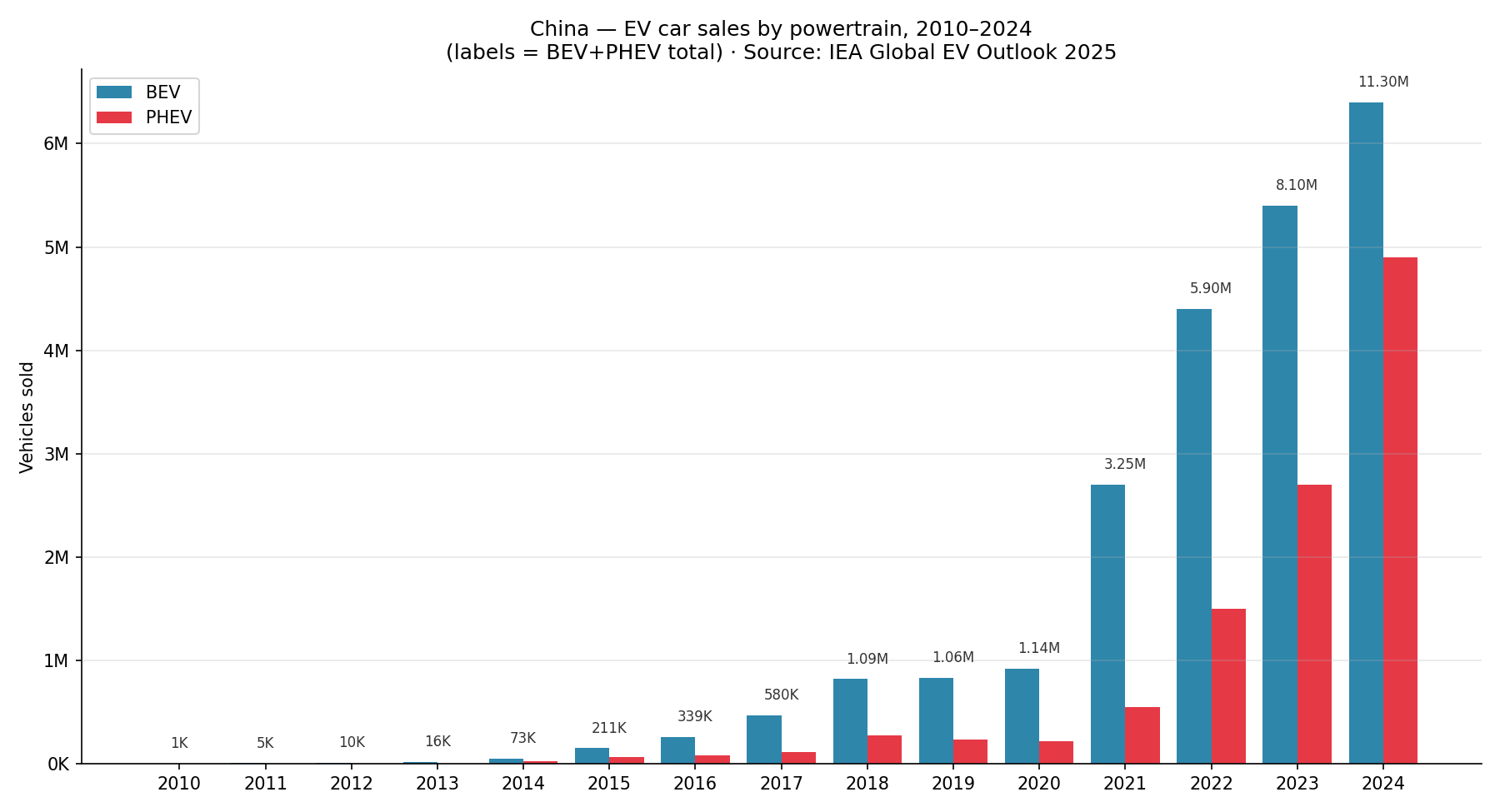
By 2024, sales had risen to 11.3M cars and only 40 manufacturers remained. The rest had collapsed, having failed to figure out their unit economics and win market share. The core technology improved dramatically over that span, but improvements have been copied so quickly that you could be mistaken for thinking that every manufacturer is selling the same car.
All of it was powered by a mountain of debt. China’s credit markets are almost entirely state-driven. The banks are government owned, and the largest businesses (or those working on a national priority) can access debt at a tremendous scale. Meanwhile, SMBs and households have access to none.
LEDMart
It seemed to me that too many hairdryers were stocked in Shenzhen’s electronics markets.
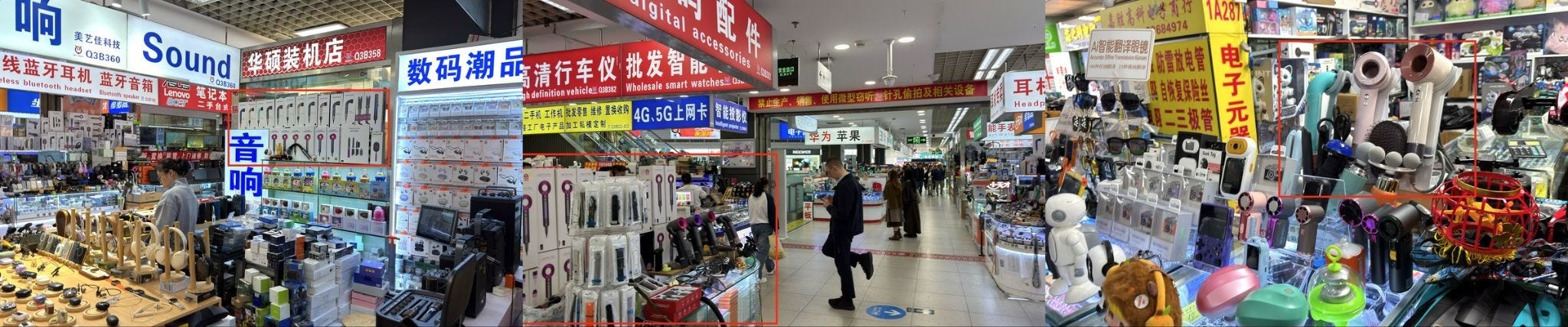
It turns out that these are currently the viral items of choice in Shenzhen. Past items have included mini air compressors and electric portable shavers. One would think shopkeepers would want to diversify and specialize in a unique item, but instead they all buy the same item and compete on price.
The mall we spent the most time in has ten levels. Riding the escalator up reveals wholesale counters for everything from capacitors to RF antennas to microcontrollers.
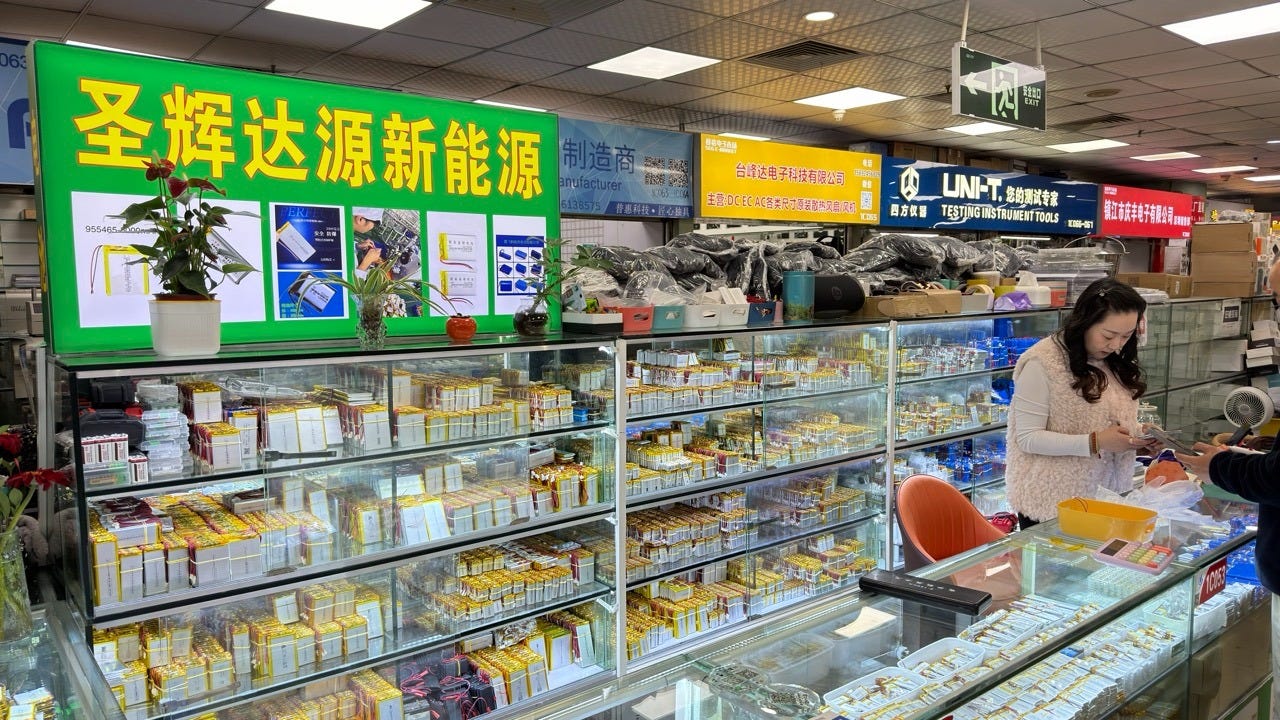
I was surprised to see so many manufacturers with a physical presence. Shouldn’t the most digital economy on earth be conducting all of its business on WeChat? They do, but the in-person presence seems to be an efficiency play — why text or call when you could just drop by the desk.
One of the upper floors, labelled LEDMart, has a few dozen vendors selling all forms of LEDs—string lights, individual diodes, addressable vs. non-addressable, etc. Just like the floors below, they all sell roughly the same set of SKUs.
We asked one of the vendors for a factory tour. When we visited the next day, I asked one of the owners how they pick which products to sell. She looked at me quizzically and said “We go on Alibaba and sort by most popular, then we make all of them.”
Manufacturing
I had a mental image of factories as cavernous warehouses or tall buildings with smokestacks coming out of them in an industrial area.
Many of Shenzhen’s office parks look almost identical to the ones in American cities and suburbs, but they’re filled with operators running machines instead of workers on computers. You quickly learn that every “office” you see is manufacturing something.
LED factory
During our visit to the electronics mall, we asked one of the LED vendors to tour their factory. After fumbling with a translation app for a few minutes, they said yes.
Two days later, we sat in a car for 45 minutes, careening through the Shenzhen sprawl to an unassuming office park.
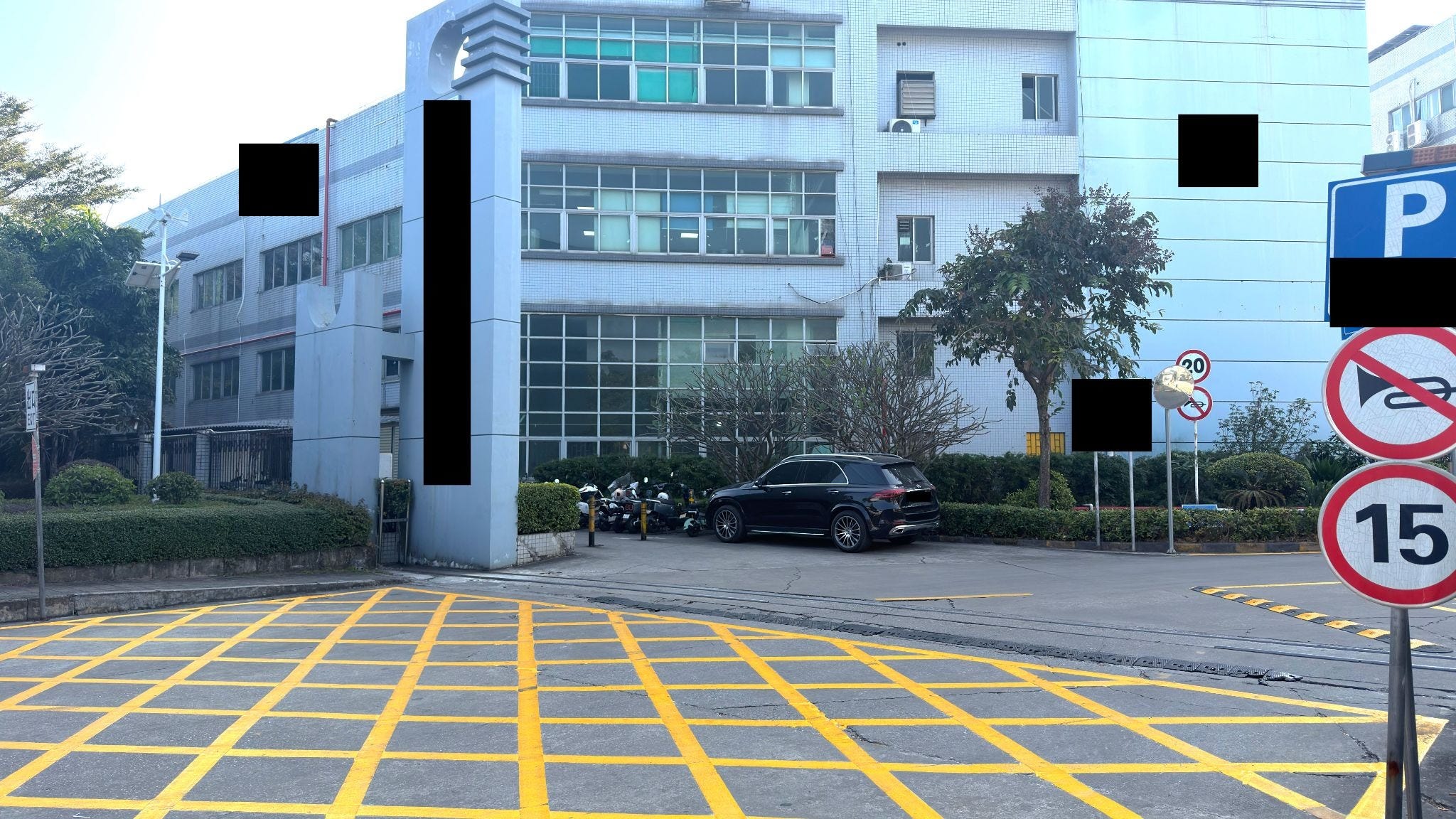
This was clearly a lower-rent operation; it was on one floor of a five-story tall office building, had poor ventilation, and a good chunk of the line was offline. Still, we watched them produce hundreds of feet of LED strips.
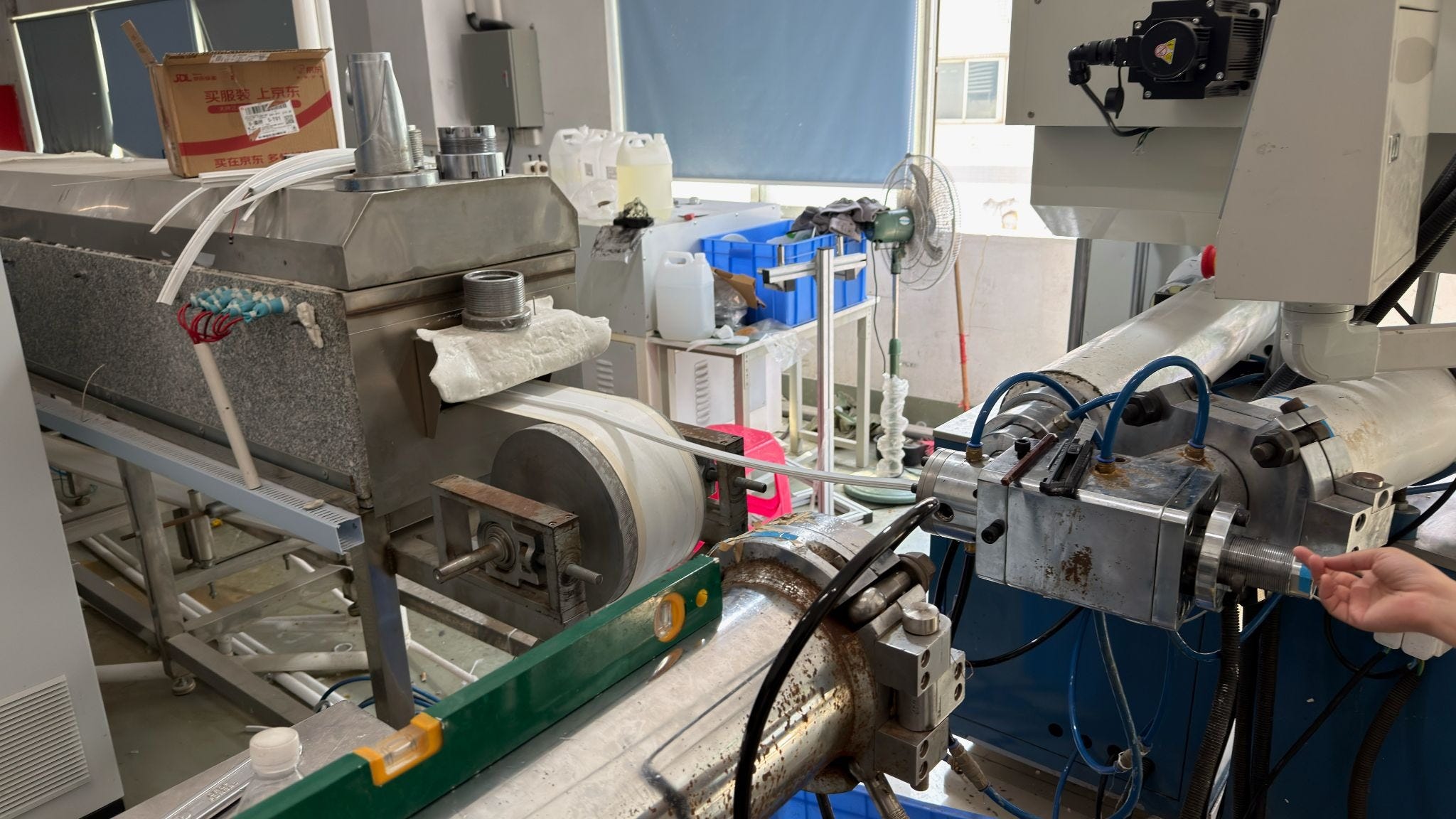
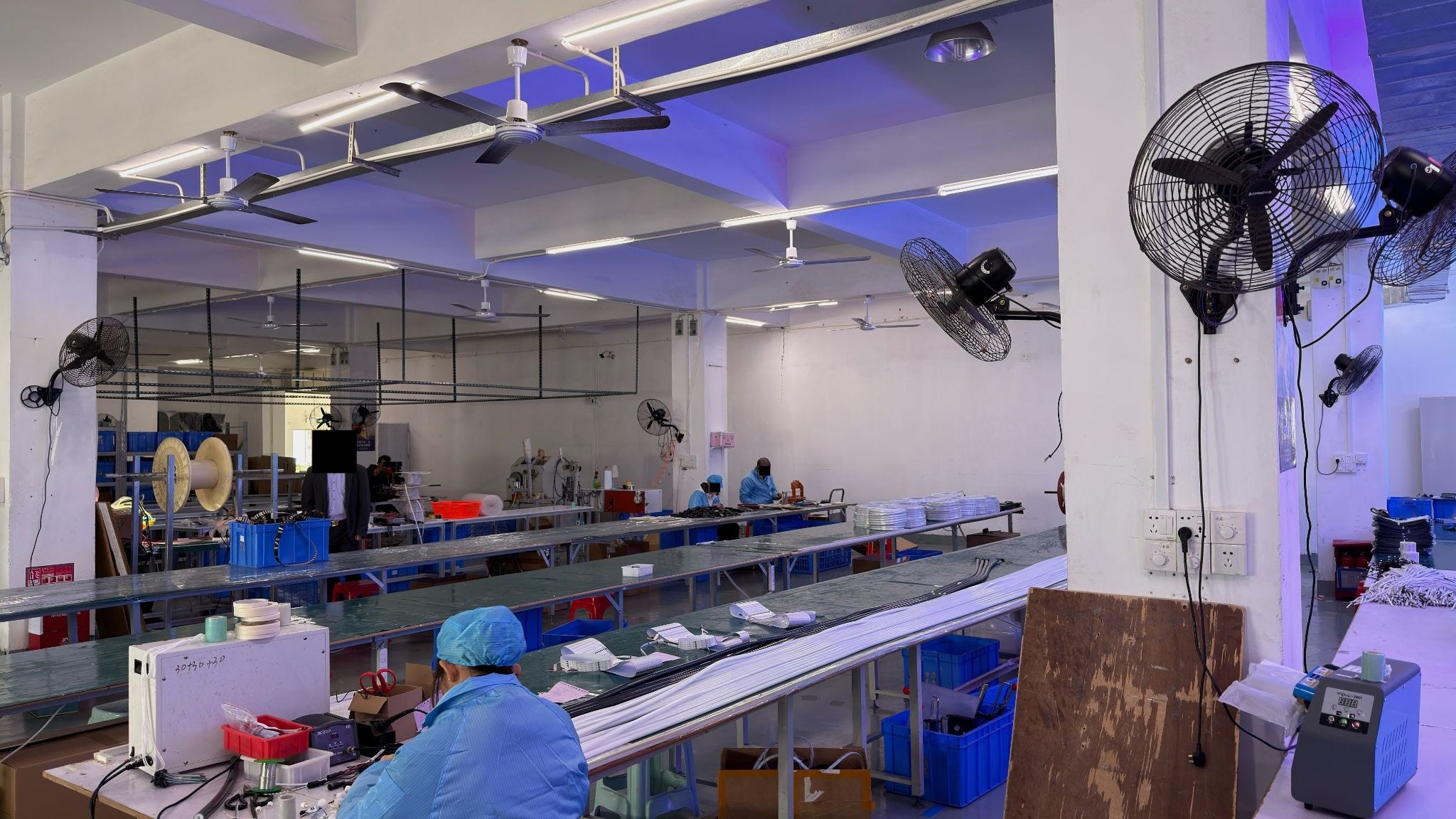
A handful of anecdotes:
They manufacture a huge number of SKUs here with limited equipment — the primitives are the LED SMD diodes themselves and the flexible PCBs they lie on.
They don’t understand who their customers are and what they care about, just what they need. Asking around, this seems like it’s standard among smaller manufacturing operations.
There is some minor R&D. When we were there, they were demoing an improved version of this hanging LED matrix that they’ve been building. There is “better” in better, faster, cheaper!
A surprising number of their employees are back-office and sales; I would say roughly 30% of their total workforce in the building.
I did not ask them how much revenue they make because I didn’t know the polite way to do this in Chinese. I wish I had figured this out earlier.
Buses, refrigerators, and photo frames
Later that week, we visited a manufacturer with operations in 15 countries. It might be easier to make a list of things that they don’t make than what they do; we saw refrigerators, photo frames, and medical communication devices. And on the way to the factory, we saw a bus with their logo on it. Go figure.
More revenue and more market cap begets professionalism. They explained that they work closely as design partners with Western companies to build out their products. This is a common modus operandi in China — it’s one of the fastest ways to ship a product out, but it’s also how bad actors steal IP.
With professionalism comes the sales tactics: there was an entire room dedicated to test equipment, and it was much talked up during the sales pitch. In what I am sure was a coincidence, this room was the only one with English signs. Upon closer inspection, many of the machines were dusty and clearly hadn’t been used recently.
Besides the test room, the factory was active — they had every stage from board assembly to final packaging. We got to see the first tangible example of tariffs; there were a handful of lines that were suspiciously empty and our rep pointed at them and explained that they’d shipped those lines to Indonesia to avoid final assembly duties.
We eventually got to chatting with our rep. She’s one of the few people who speaks English, and has done multi-national sales for Chinese manufacturers for the past decade. She seemed generally frustrated with the state of US/China relations, and had lots of commentary about Trump, calling him a thief.
On the way out, we saw employees moving around the campus for lunch. 30,000 of them work here!
Life
Common wisdom would suggest that building a city would require you to pick two: cars, buses, trains, biking, or walking. Shenzhen’s builders would vehemently disagree with this idea, and have chosen all of the above. There is a dense subway network that can take you to the outskirts of the city, the highways are well-developed, and biking and walking are both quite pleasant.
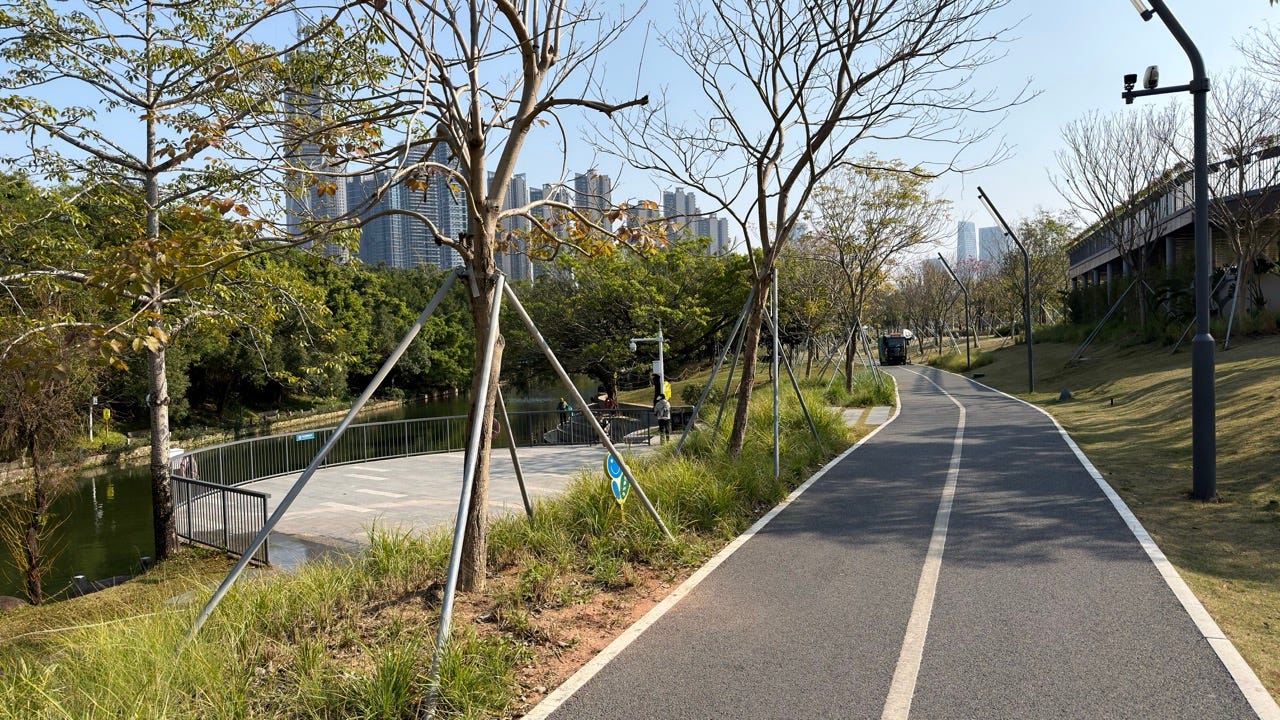
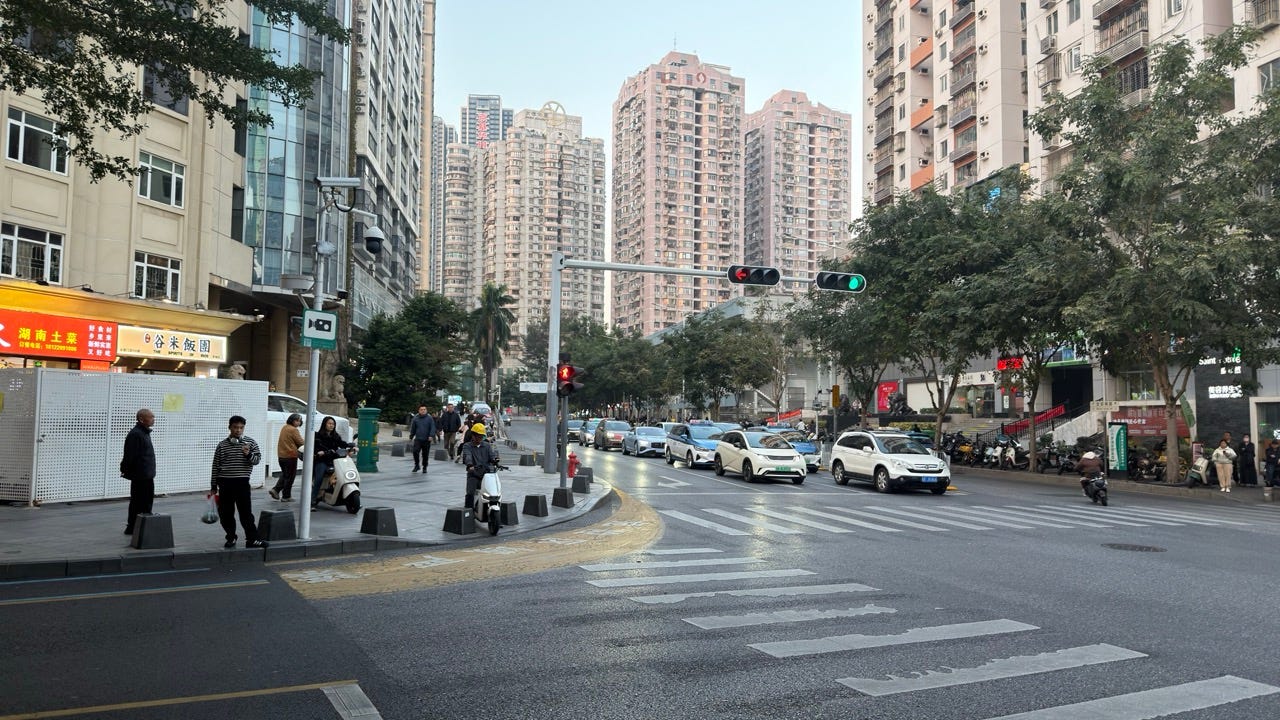
The pace of construction is evident everywhere you look. We passed row after row of skyscrapers for the full 45 minute drive to the LED factory. Malls and parks that had opened or been renovated weeks ago were so commonplace that I stopped noticing them.
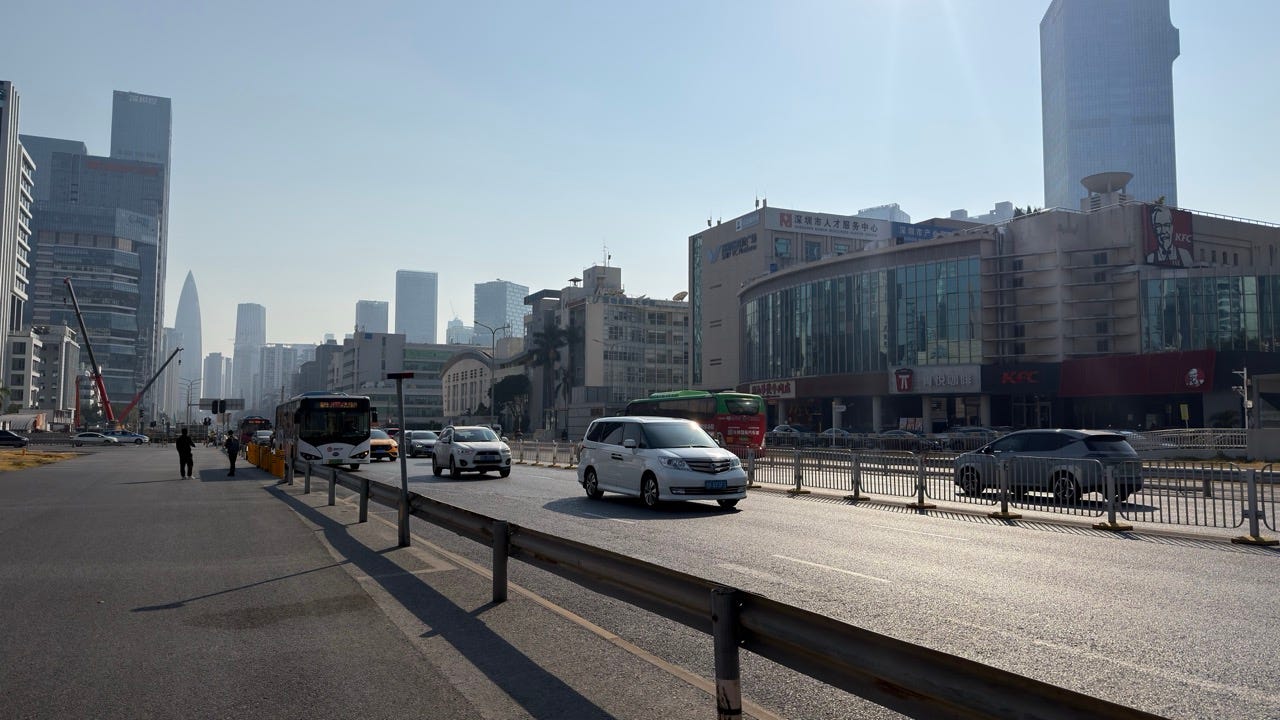
Locals we talked to were surprised to hear that this level of construction doesn’t exist in the U.S.
There are indeed cameras everywhere. This is perhaps most noticeable in parks, where you’re surrounded by nature with the exception of the 24in diameter CCTV cameras sitting on the light poles every hundred feet. This does make the country feel incredibly safe — you feel like you can go anywhere at any hour without the cognitive load of evaluating your surroundings that we have in the U.S.
Being middle class in China is clearly comfortable. You can order food delivery that comes in under ten minutes, you can venture down the street to the fifth new mall to open that year, or you can get on a train and be in another city in hours.
As we explored, we were lucky to meet some locals who shared parts of their lives with us.
Rags to riches
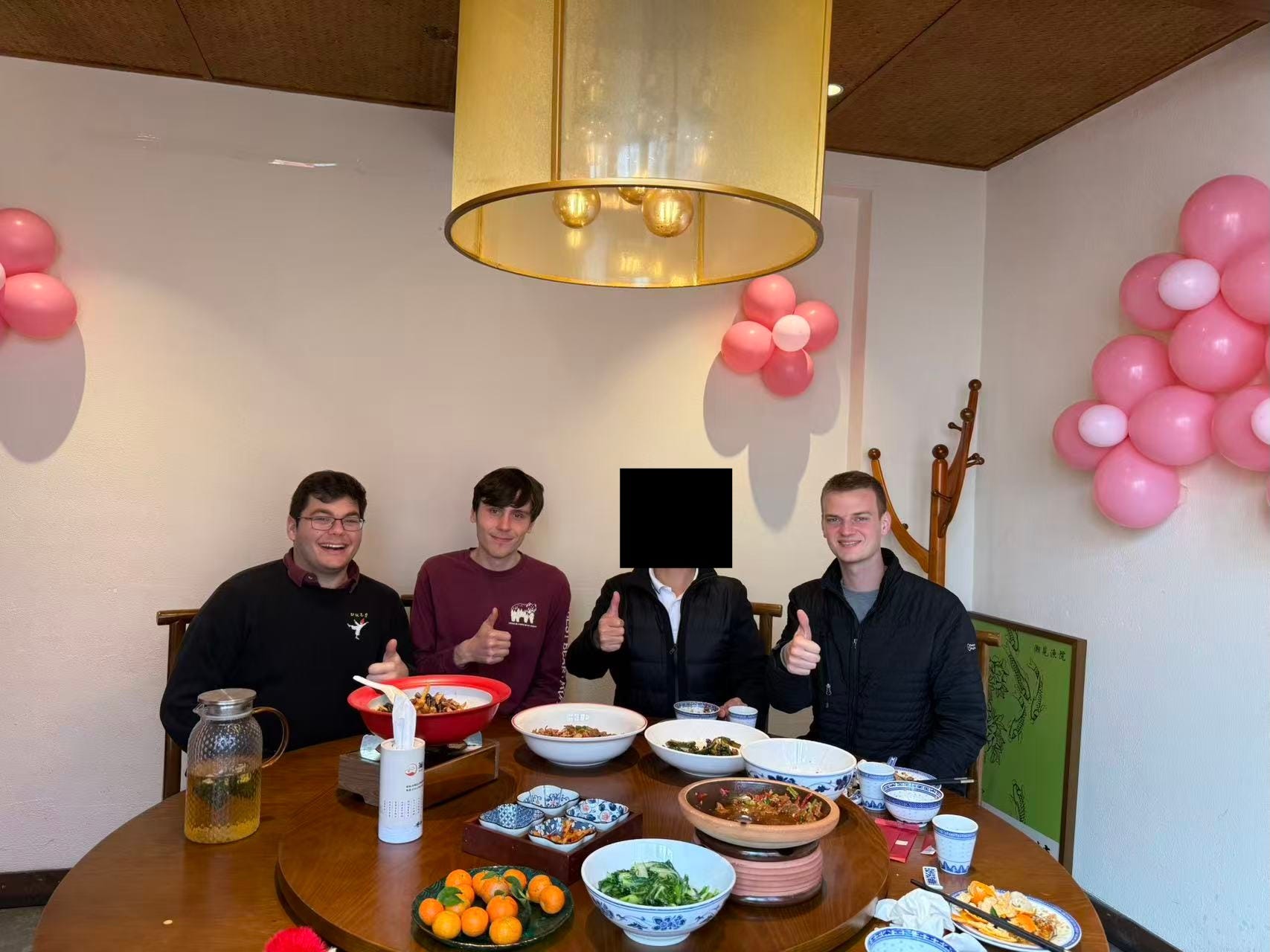
Brandon grew up in abject poverty on the outskirts of Changsha in a farming village with 5 siblings. His family had the smallest plot of land in their village — what they did produce, they had to sell to survive. We discussed the stereotype of Chinese people eating dogs, to which he explained: “You have to understand that growing up we had no meat. We took anything we could get.”
After high school, he needed to support his family. So he moved to Shenzhen, part of the mass of migrant workers that built the city. His first job was in an injection molding factory, making the molds themselves. Injection molds are the foundation of mass-produced plastics, they allow you to model a part once, then produce massive quantities of it for just the cost of the plastic.
He quickly realized that he needed to start his own mold factory and sell to overseas customers to build wealth. Over the next few years, he taught himself English by watching American media.
Eventually, he moved to Hong Kong to start a trading company. He fronted to customers that he owned his production, but he really just passed the orders off to his friends.
Many years later, he’d saved up enough to start his own factory. He now makes molds for many brands that you and I have heard of across automotive, children’s toys, watches, etc.
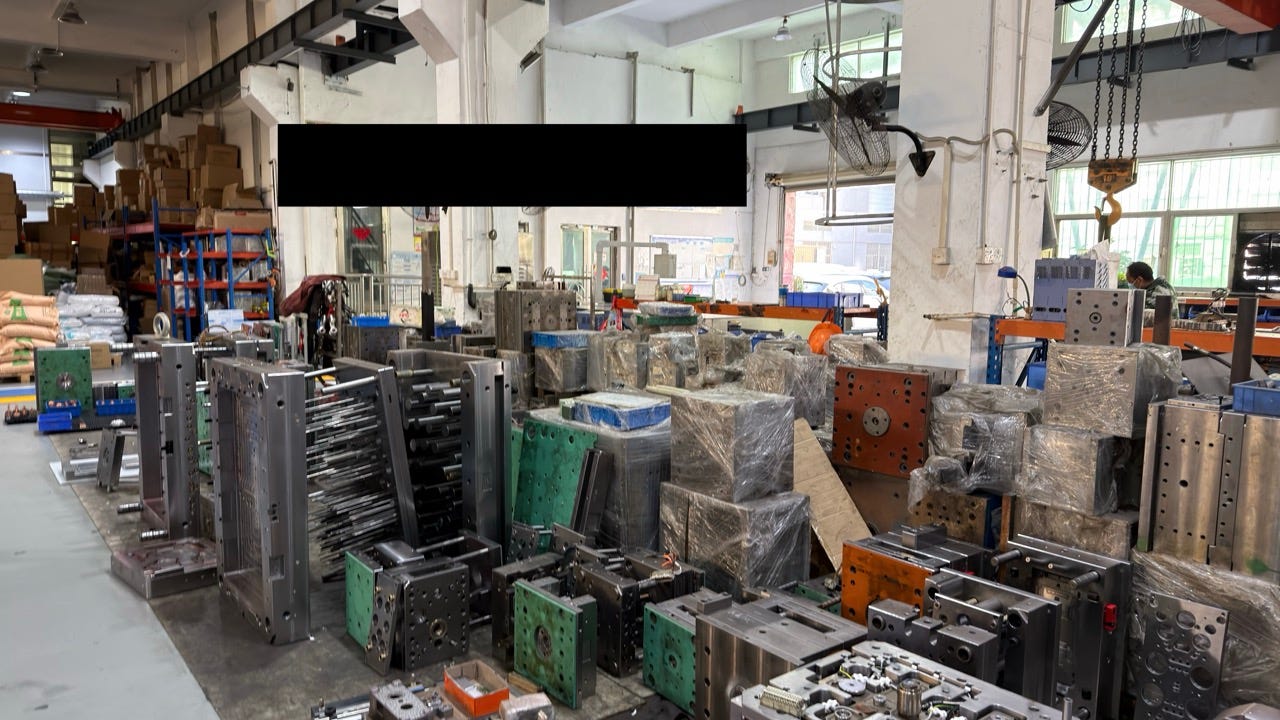
It would be hard to understate the precision necessary to make these molds. The factory has wire-cutting machines, 5-axis CNCs that vary in size from a tabletop to a full room, and tons of other manual tooling. After they build the molds, they run thermocouples + resistance heaters through them so they heat evenly when the plastic is injected.
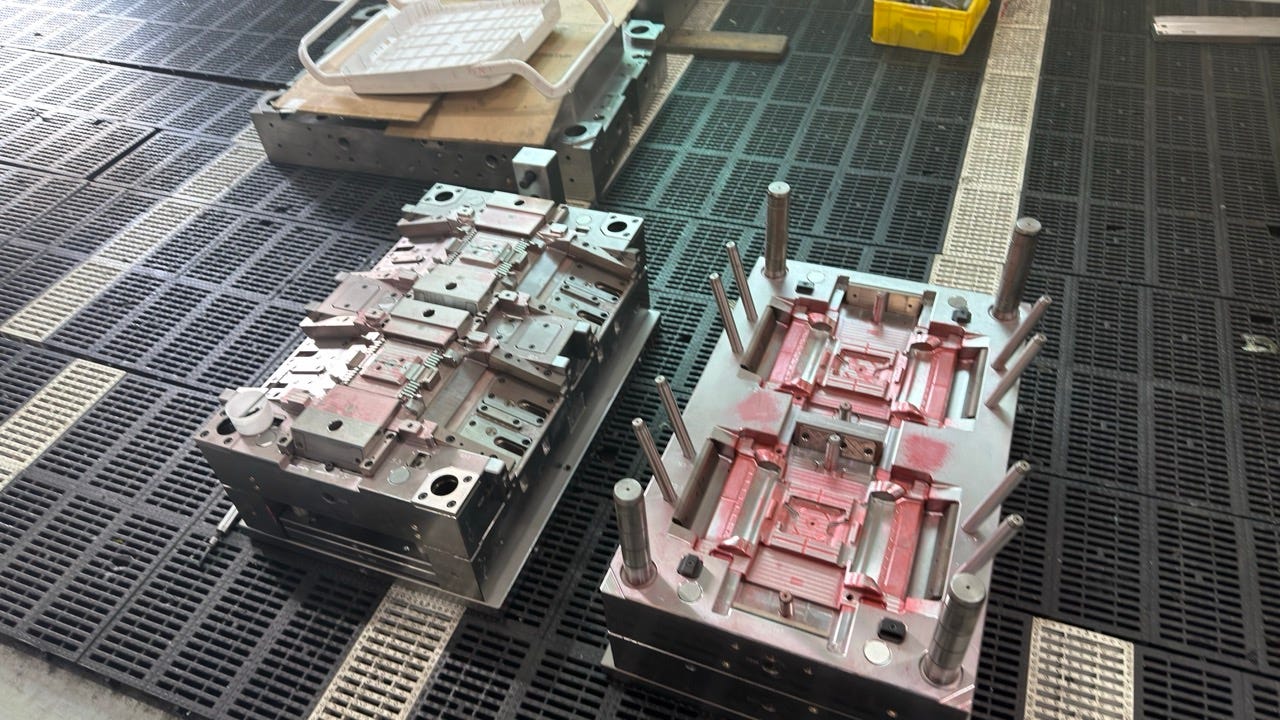
Brandon told us that most of his employees have been with him for 5+ years. We asked him about automation; he explained that the amount of precision needed for these molds is still too substantial to pull a human out of the loop. CNC is the best he thinks he can do.
Lying flat
We were sitting in McDonalds when someone turned around and in perfect English said “Americans!? What are you guys doing here?”
Samuel is a 28-year-old who studied in the U.S. for 12 years, through boarding high school, college and grad school. He is deeply familiar with American culture, speaks perfect English and you would have no idea that he is Chinese. After hanging out with him for a few hours, we asked him why he doesn’t live in the U.S.
He introduced us to the concept of “lying flat” (tang ping, in Chinese) — which is slang that Chinese youth are using to describe living a low-desire, low-mobility life. The thinking goes: “Everything is so competitive, I am happy with what I have, why wouldn’t I do the bare minimum and just live my life?”
Folks who want to lie flat don’t aspire to get married, they don’t want to get promoted, they just want to stay where they are.
Samuel is lying flat. This is why he won’t move to the U.S. It’s why, despite being a great English teacher, he’s not going to start his own business. It was perplexing to hear someone so eloquent explain a concept that justifies stasis.
It turns out that Samuel is in good company. China has some of the highest youth unemployment in the world among development countries, owing to skyrocketing housing costs and a decade of college graduates who were guaranteed white-collar jobs that didn’t exist. He explained to us that many of his generation believe that there won’t be a path upwards for those like him.
In a culture where creating value for those around you is a principle value, there’s a belief that it’s more noble to opt-out than to indefinitely strive.
The government has banned the mention of tang ping on all Chinese social media. A state-run newspaper remarked in an op-ed: “In the face of pressure, choosing to ‘lie flat’ is not only unjust, but shameful. There is no value whatsoever in this poisonous chicken soup.”
Takeaways
U.S. vs Chinese capitalism
Only after I returned did I realize how anchored our markets are in optimism. We somehow have summoned the durable arrogance to believe that we can invent things that the market hasn’t explicitly requested. And when we’re right, which we will be, we’ll grow the pie for everyone.
This belief shapes how U.S. investors think about new businesses; we aren’t able to get excited about low-margin businesses or cutthroat competition. We like monopolies and high margins, and are willing to withhold dollars and cultural significance from those that are not.
My sense was that China operates from a fundamentally different set of beliefs.
The markets that exist are the markets to compete in. The people (read: “demand”) know best what they want; to try to guess would be foolishness. And if you are going to compete you better compete as hard as you can: sell the same product as your competitors so their customers can swap quickly, do it at penny-thin margins, and conquer the market and scale. Selling a commodity is a noble mission.
This is only a partial diagnosis of why the countries encourage internal competition differently. China’s credit markets are not nearly as deep as the ones we have in the U.S; if you aren’t working on a national priority and are not one of the biggest companies in the country, good luck finding capital. The businesses that are able to rough-and-tumble through a commodity typically have some sort of heavy subsidization in the past, even if it doesn’t exist today.
This environment makes innovation difficult. Trying to do heavy R&D without access to debt is nigh impossible. All industrial policy points to faster, cheaper, better, so your only option is to participate.
Big parent
I expected that a country known for being socialist with a centrally-planned economy would have high welfare spending and high taxes.
In reality, the Chinese government spends half of what other developed countries spend, at ~8% of GDP. And to go along, no property taxes and low income taxes.
Every year, the country builds thousands of skyscrapers, bridges, and other pieces of built infrastructure. China’s economy is one of the most digital in the world, but when we entered the highway, someone reached out of a toll booth and handed us a physical ticket. Getting on the subway required going through a metal detector, which was always staffed by no less than five people standing around.
It seems that, if you are in an urban area, you will generally be taken care of. A job will materialize for you and the built environment around you will improve yearly. The story is more complicated in agricultural areas and poorer regions.
I was originally describing this as a social contract. Discussing this trip with one of my Chinese friends yielded a perplexed look where she explained to me that there is no translation of this phrase in China, and said simply “The government is the big parent.”
The hukou system, which binds social services access to the province you originate from, has effectively prohibited social mobility. Why? Well, folks from agricultural regions need to stay there so that the country can continue to grow its own food. The big parent needs to optimize for all of its children.
You will not have handouts (welfare); you need to be properly incentivized to participate in the growth of the collective. The big parent does understand that sometimes, it is hard for people to adapt. This is why the toll booths still exist, and it’s why everyone in the subway is getting wanded down before they can get on the train.
There wasn’t consensus among those I met on whether China is a good place to live. But everyone described the same deal: you’ll have limited freedom of expression, and you will agree to work very hard. In exchange, your quality-of-life will improve, the environment around you will modernize, and the country will continue to ascend.
There is an awareness that there are unknowns while living under the big parent. The trade is starting to look worse for young people. And parents sometimes make decisions that their children disagree with. Or, in China’s case, sometimes the parents crash the economy.
Values
One local explained to us that she wanted to move to the United States; she feels like she lacks freedom in China. All of her wealthy friends have already moved. She grew up in a rural region and graduated from college in Shenzhen. Her last few years have been spent building a consultancy for Western businesses that are trying to do business in China.
Asked what freedom means to her, she didn’t have an answer. I was left wondering whether the parent atrophied the vocabulary she needed to describe freedom; it was the most honest answer she could have given.
Framing the government as a parent is entirely foreign to both myself and everyone I know who has spent their life in the U.S. Our philosophy of government is to ensure fair markets and act as a pendulum against massive societal change.
These values allow us dynamism. When the playing field is fair, and risk appetite plentiful, we have an environment that gives us the chutzpah to invent new things that our collective can’t conceive of yet.
A paternalistic government has dynamism as an exception case rather than the norm — markets are created by deep subsidization followed by a pullback that forces the mighty to rise to the top, not by exploration into new ideas. That’s not to say that you’ll never invent things; DJI and TikTok made real strides. But I don’t think you’ll build the iPhone doing this, you need enough slack and freedom to be continuously wrong.
Our dynamism is what pushed us ahead digitally for the past 30 years. Given that the new axis of competition is the physical world, we’re on a collision course. Understanding the values on the other side of that collision is just good strategy. Dynamism is fundamentally a bet on letting entropy generated by human nature determine the course of the world. Paternalism is a bet against.
Thank you to many friends for reading and providing feedback on drafts of this post.
The woman who couldn’t find the words for freedom when asked directly is such an honest but unsettling moment. And Brandon teaching himself English from American media to sell injection molds overseas — that’s Shenzhen in one person. Really well observed.